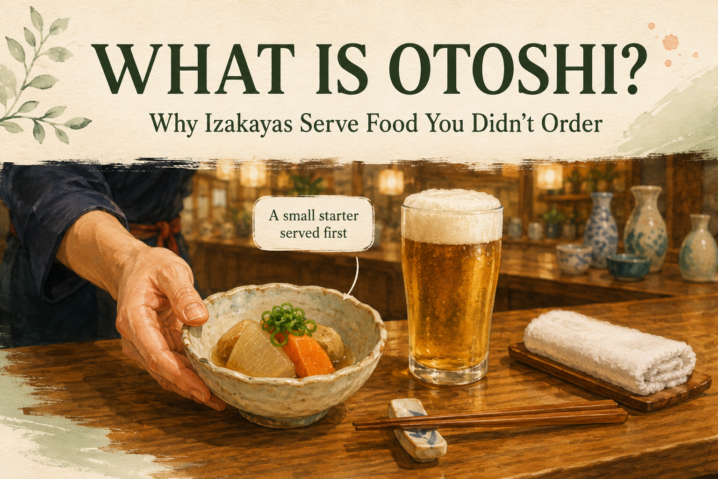
When you sit down at a Japanese izakaya, a small dish you never ordered often arrives at your table — and its cost shows up on the bill. This is called “otoshi,” a uniquely Japanese izakaya custom that catches many foreign visitors off guard. It isn’t a scam or a mistake; it’s a legitimate part of Japanese dining culture. Here’s what otoshi actually is and the etiquette worth knowing.
What Is Otoshi?
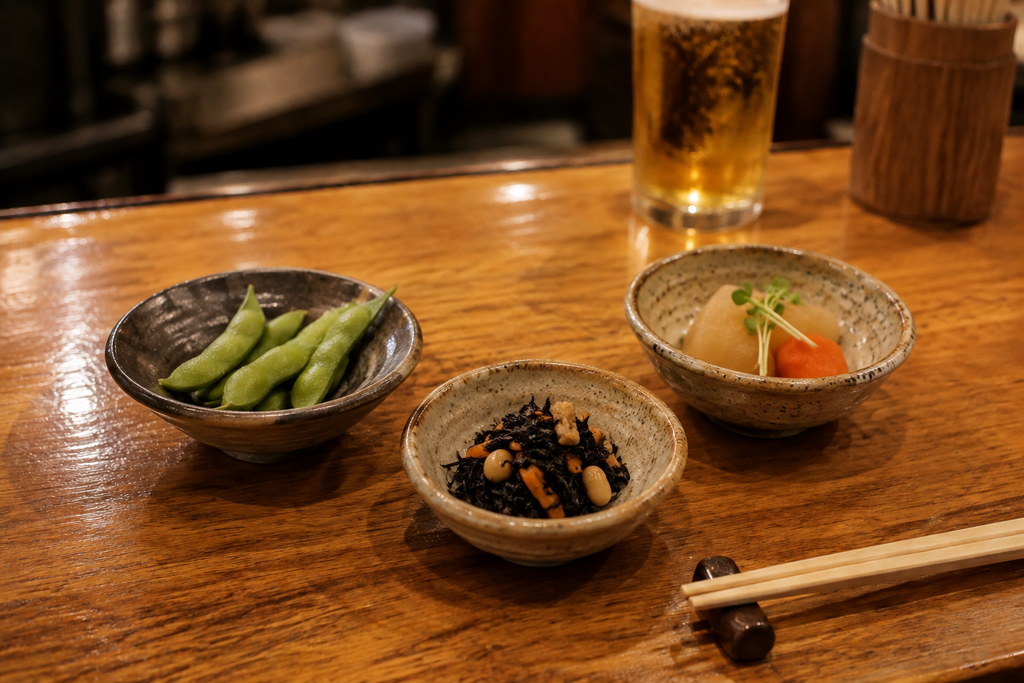
Otoshi is a small appetizer that the restaurant automatically serves around the time you sit down, before or right after you place your first order. Edamame, pickles, or a small simmered dish are common examples, and the specific dish varies by restaurant — but the one constant is that you never ordered it. In some regions it’s called “tsukidashi” instead.
Why Are You Charged for It?
Otoshi isn’t free. Most izakayas charge around 300 to 500 yen per person for it, functioning less like a dish you chose and more like a seating charge or table charge. The idea is similar to a cover charge at a bar or restaurant — payment for securing a seat at the table itself. Trying to decline it rarely works, since most restaurants serve it automatically before you’ve even looked at the menu.
Can You Refuse It?
In most cases, no. At many izakayas, the otoshi charge is tied to being seated at all, so the fee applies whether or not you actually eat the dish. Telling staff you don’t want it usually won’t change anything, so it’s best to think of it simply as part of the base cost of dining at a Japanese izakaya.
How Much Does It Cost?
The price varies by restaurant and region, but 300 to 500 yen per person is a common range. Higher-end izakayas or those offering course meals may charge more. Because the charge often isn’t listed on the menu, it’s completely fine to ask staff about it before you order if you’re curious.
Common Misunderstandings About Otoshi
- Assuming it’s a scam: Otoshi is not an illegal add-on charge — it’s a long-established, legitimate custom at Japanese restaurants.
- Refusing to pay because you never ordered it: Since the charge is usually tied to being seated, it applies even if you don’t eat the dish.
- Assuming it was served by mistake because it’s not on the menu: Otoshi is a service item rather than something you order, so it’s typically left off the regular menu.
- Assuming every restaurant does this: Otoshi is mainly an izakaya custom — restaurants, fast food chains, and most other dining spots don’t charge it.
- Ignoring it because the portion is small: Even a small dish carries a charge, so it’s worth taking at least a bite rather than leaving it untouched.
What Should You Do in These Situations? (Q&A)
Q: Can I refuse otoshi if I don’t want to eat it?
A: Usually not. At most restaurants it’s treated as a charge tied to being seated, so it’s difficult to avoid the fee itself.
Q: I can’t tell where the otoshi charge is on my receipt.
A: It’s usually listed as its own line item under a name like “otoshi,” “tsukidashi,” or “table charge,” separate from your food and drink orders. Feel free to ask staff if you’re not sure.
Scope: General custom at izakayas nationwide
Last Verified: (to be filled in at publication)