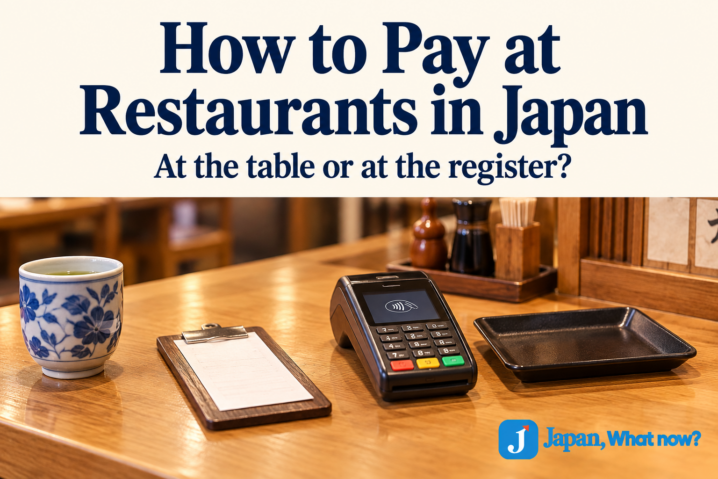
You have finished eating, but nobody seems to be bringing a card machine. There is a small slip of paper on the table. Should you wait, call someone over, or head for the door?
Ask a staff member where to pay. Some restaurants use a register, while others take payment at your table. If you are directed to the register and a bill was left at your table, take it with you.
Do you pay at the table or at the register?
Both arrangements exist. Do not assume the routine from your previous meal applies everywhere. Tokyo’s visitor guide explicitly recommends asking staff whether payment is at the cashier or at the table. GO TOKYO restaurant manners guide
When you are ready, get a staff member’s attention and ask for the bill. A table call button, where provided for service, can help. Otherwise, a polite “Excuse me” is enough to start the conversation. JNTO describes both call buttons and calling “sumimasen” to attract a server’s attention at izakaya. JNTO nightlife guide
Wait for the staff member’s directions rather than leaving money and walking away.
What should you do with the slip on your table?
If a paper bill or check has been left, keep it handy. When staff direct you to pay at the register, bring that slip so they can identify your order. You do not need to remove menus, table signs or ordering devices unless asked.
No paper slip? Ask how to check out. The useful question is where and how to pay, rather than whether you have missed a particular piece of paper. JNTO’s restaurant phrase guide distinguishes the bill, register and table as separate parts of this situation. JNTO restaurant vocabulary
A simple checkout sequence
- Let staff know you are ready to pay.
- Confirm whether to stay at the table or go to the register.
- Bring the bill if one was left and you are paying at the register.
- Check the amount and ask about anything you do not understand before paying.
- Follow the cashier’s or terminal’s instructions. Wait for confirmation that payment is complete, and collect your card, change and receipt as applicable.
If a payment attempt fails, check with staff whether anything went through before trying again. This avoids guessing from a sound or screen you do not understand.
Can you pay by card?
Ask before ordering if you need to use a particular payment method. Acceptance differs by venue; a card or mobile payment method that worked at lunch may not work at dinner. JNTO recommends checking accepted methods before entering a business. JNTO customs and etiquette
Having some cash available is a useful backup. A Tokyo restaurant guide also advises visitors to check card acceptance before ordering at casual eateries. Sumida restaurant guide
What if your group wants to pay separately?
Ask staff before starting the payment process. Do not assume the restaurant can divide the bill by person, by item, or across several cards. If separate payments are not available, agree within your group how to handle a single payment.
Making that decision before everyone reaches the register keeps the conversation simpler for you and the cashier.
What if you already paid at a ticket machine?
Some restaurants sell meal tickets before you eat. If you paid when buying your ticket, that payment covers the items purchased through the machine. Check how any later extras are charged rather than automatically paying for the same meal again. Follow the venue’s instructions for handing over your ticket. GO TOKYO restaurant manners guide
Why is there an extra charge?
At some izakaya, a small appetizer called otoshi is served automatically and charged as a cover charge. Ask staff to explain an unfamiliar item on the bill. For future visits, checking charges before ordering can prevent a surprise. JNTO customs and etiquette
For more detail, see our guide to otoshi.
The main habit to remember is simple: ask where to pay, keep the bill handy, and finish the payment with staff before leaving.