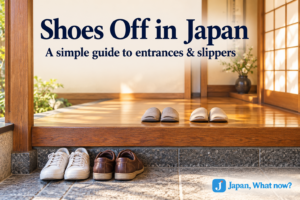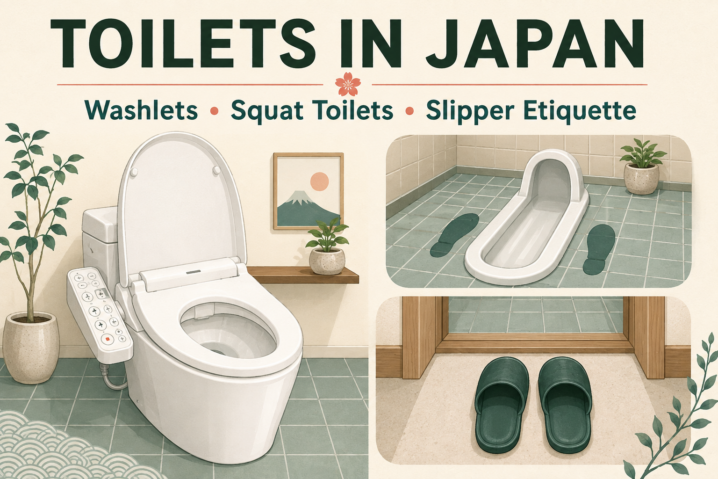
Japanese restrooms can sometimes be confusing for foreign tourists visiting for the first time. High-tech “Washlets” feature control panels lined with unfamiliar buttons, older buildings and train stations still have traditional squat toilets, and in homes and small restaurants, you may be asked to change into slippers designated for the restroom. Once you know what to expect, it’s not difficult at all. Here, we’ve summarized the key points for using Japanese restrooms with confidence.
How to Use a Washlet (High-Performance Toilet Seat)
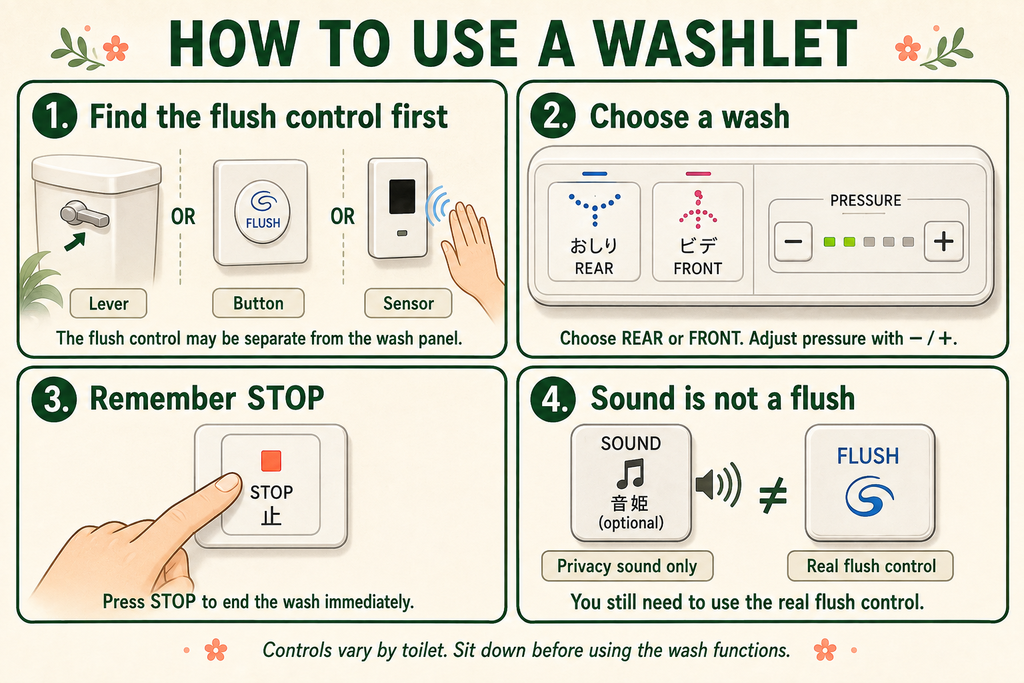
Step 1: First, Locate the “Flush” Button (Lever)
With Washlets, there is often no “flush” button on the control panel next to the toilet seat. There may be a separate lever or button on the wall, or it may be a sensor-activated system that responds to hand movement. The buttons on the control panel are intended solely for the warm-water cleansing function and are not for flushing.
Step 2: Identify the Wash Buttons
The two most common buttons are “Rear Wash” (an illustration of a person sitting with a water splash symbol, or the Japanese word “おしり”, meaning “rear”) and “Bidet (Front Wash).” Pressing either one starts the wash cycle, and you can adjust the water pressure using the strong/weak buttons (usually marked with + and – symbols).
Step 3: Remember the “Stop” Button
There is always a stop button indicated by a square icon or the kanji “止” (meaning “stop”). Press this if you want to stop the cleansing immediately.
Step 4: Don’t Be Misled by the “Otohime” (Water Sound) Button
There is often a button designed solely to play a sound (a simulated water sound for privacy), but this does not actually flush water. Even after pressing it, you’ll still need to perform the actual “flush” operation separately.
How to Use a Squat Toilet
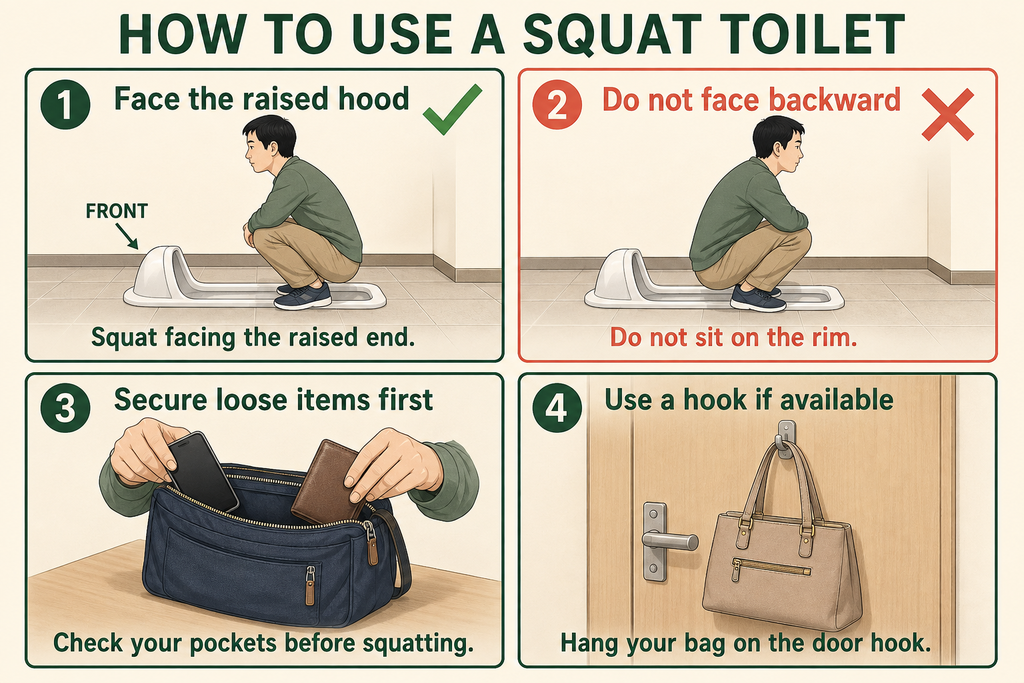
Squat toilets are still in use in older buildings, train stations, and some public facilities. The protruding part of the toilet (the hood-shaped section) is the front, so face that side and squat down. Before squatting, make sure to secure the contents of your pockets—such as your smartphone or wallet—as they can easily fall out when you lower yourself. If there’s a hook on the door, it’s a good idea to hang your bag there for peace of mind.
Etiquette for Toilet Slippers
In homes, ryokan (traditional inns), temples, and some small restaurants, toilet-specific slippers may be provided at the entrance to the restroom. Since restroom floors are generally considered less clean than other areas, it is proper etiquette to change into these slippers before entering and immediately switch back to your regular indoor shoes upon exiting. The most common mistake is returning to the room while still wearing the restroom slippers, so get into the habit of checking your feet before leaving.
Common Mistakes
- Walking out while still wearing the restroom slippers: This is the most common mistake, and Japanese hosts will notice it immediately. Be sure to check your feet before leaving.
- Mistaking the “Otohime” button for the “flush” button: It only plays a sound; it doesn’t actually flush the toilet. Look for the actual “flush” button separately.
- Facing the wrong direction on a squat toilet: Facing away from the hood makes it difficult to use and can be uncomfortable.
- Squatting without securing your belongings: Smartphones and wallets can easily fall out of your pockets, so either empty your pockets beforehand or use a hook.
- Panicking because you’re confused by the buttons: Even if you don’t know what a button does, pressing the “Stop” button will always turn it off.
What Should You Do in These Situations? (Q&A)
Q. I just can’t find the flush button. What should I do?
A. Check the wall next to the toilet, or see if it’s a sensor-activated model. On many Washlets, the cleansing function and the “flush” function are separate.
Q. Is it rude to use the Washlet as a regular toilet without using the cleansing function?
A. Not at all. The cleansing and drying functions are merely optional, so it’s perfectly fine to use it as a regular toilet without them.
Information Verification
Scope: General etiquette and equipment common nationwide
Last Verified: (to be filled in at publication)