
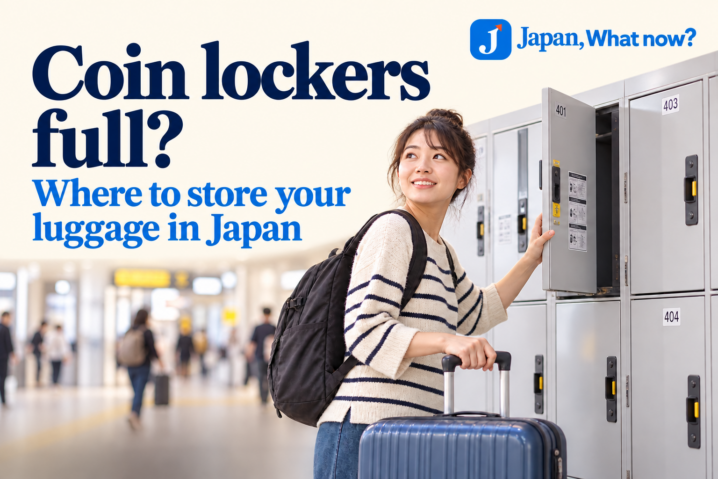
You have a few hours before check-in, a suitcase beside you, and no locker big enough for it. What now?
Check another locker area, then look for a staffed luggage storage counter or a bookable storage location. Japan has both station lockers and luggage storage services, so a full bank of lockers does not have to end your sightseeing plans. JNTO: Luggage & Storage
First, check the station map
Before walking around with your suitcase, find the station’s locker symbol or ask at an information desk. JR East provides locker locations on maps of major stations, and its station information pages show whether lockers are available. JR East: Finding coin lockers
Check the floor and nearest exit, not just the station name. Also check whether the location is inside or outside the ticket gates. A locker on the other side of a gate may not be convenient for your return route.
At Tokyo Station, the official information page links to locker availability tools and lists luggage counters both inside and outside the gates. This is a useful local example, rather than a feature to assume every station has. Tokyo Station City: Maps and baggage storage
What if my suitcase does not fit?
Look for a larger compartment, but do not force the door closed. Check that the entire bag, including wheels and handles, fits before completing payment.
If the available lockers are too small, switch to a luggage storage counter. Ask whether your bag is accepted and what the full charge will be. Keep any claim ticket or booking confirmation somewhere you can reach without reopening your suitcase.
Where else can I leave my luggage?
A staffed storage counter: Check the station’s official facilities page for “baggage storage,” “luggage storage” or “cloak service.” At Tokyo Station, several such facilities are listed, each with its own location and service details. Tokyo Station City: Baggage storage
A reservable storage location: Services such as ecbo cloak connect travelers with shops and other facilities that store bags. Check the individual location, available booking times and current payment instructions before heading there. A nearby listing is not a guarantee of space for your bag. ecbo cloak: Official app information
Your accommodation: If you are staying nearby, ask whether it can hold your luggage before check-in or after checkout. Confirm this directly; do not assume every property offers it or that storage is free.
Before locking the door, check these four things
- Access hours and collection time. Check when you can return to the locker area or counter. A storage period and the building’s opening hours are separate things.
- Charges and maximum duration. Read the posted rules, including when another charge applies. Do not assume “one day” always means 24 hours from payment.
- How to reopen the locker. Keep the key, receipt or access method specified by the machine. With the Suica locker system described by JR East, the same card is used to retrieve your luggage. Keep that card with you. JR East: Welcome Suica locker instructions
- The exact location. Photograph the locker number and nearby signs. Note the floor, gate or exit so you can find your way back.
Take out your passport, medication, phone and anything else you will need before storing your bag. Follow the facility’s restrictions on valuables and other items.
What if the locker will not open?
Use the operator’s contact details printed on the locker or ask nearby staff where to get help. Have the locker number and your receipt or payment information ready. Avoid forcing the door or repeatedly paying without understanding the problem.
If you have a train or flight to catch, allow time to collect your bag. Your best storage option is one you can comfortably return to—not simply the closest empty locker right now.


